

Good Housekeeping
A relatively quick update for September! I love taking stock and taking inventory, I love planning, and I love organizing.
The energy of summer catches up with me and I truly enjoy taking a step back and re-setting my intentions for the next season. There is so much to do in the Farmington Room in terms of preservation, increasing access, and making our collections more visible to the community as a resource for local history. All of everything that needs to be done in here feels like a high priority for me, so this stock-taking becomes even more important!
Lately, I have re-focused some of my energy on getting our archival collections housed in the best way possible, described, and catalogued within an updated organizational structure. There are a few important layers to processing and providing access to these fascinating materials, which I am excited to dive into next month for National Archives Month (October).
This month, I want to quickly share a project that I started a few weeks ago with one of my colleagues, and that is...we are vacuuming the antique book collection. I have been working with the Northeast Document Conservation Center (NEDCC) on determining how to ensure that these ancient books are living their best lives at The Farmington Libraries.
Our antique book collection contains books that were in the original collections of the libraries (yes, more than one) that were absorbed into the Village Library. The Village Library became part of the Farmington Village Green and Library Association (FVGLA), our parent organization, in 1901. The oldest book in the collection is from 1702. There are gorgeous, marbled papers and covers in the collection, and I love seeing all the different bookplates from the libraries that they belonged to: West End Association, Tunxis Library, the Monthly Library, and so on. I will definitely spend more time talking about this project in the next few months.
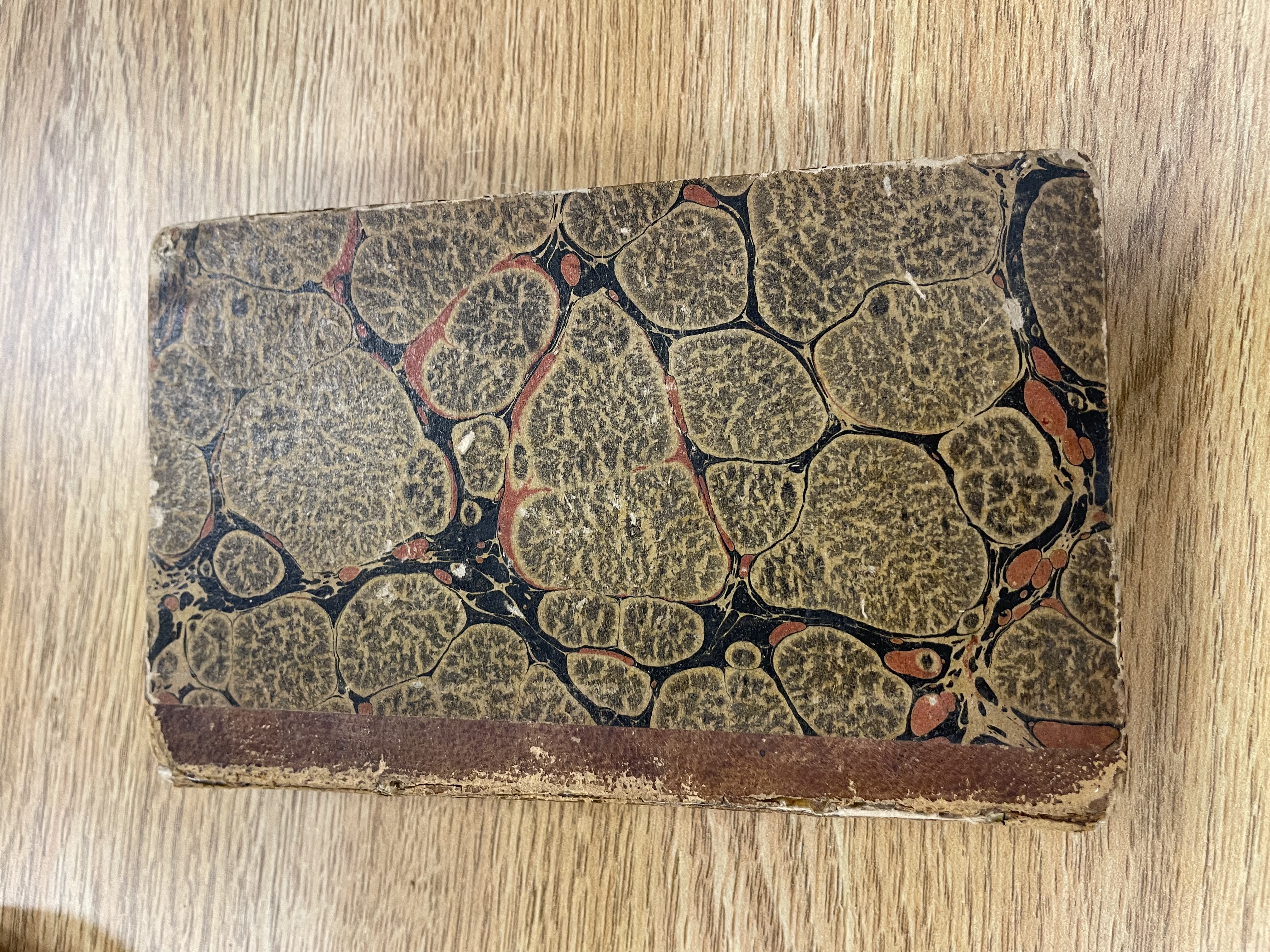
Some of these books may need special housing, such as a custom box. In an effort to make sure their lives are prolonged under our care, we do not let them be handled by researchers. To this effect, we are doing research to find which of these titles can be found digitized online, so that the content can be accessed, even if the object itself is too fragile to touch.
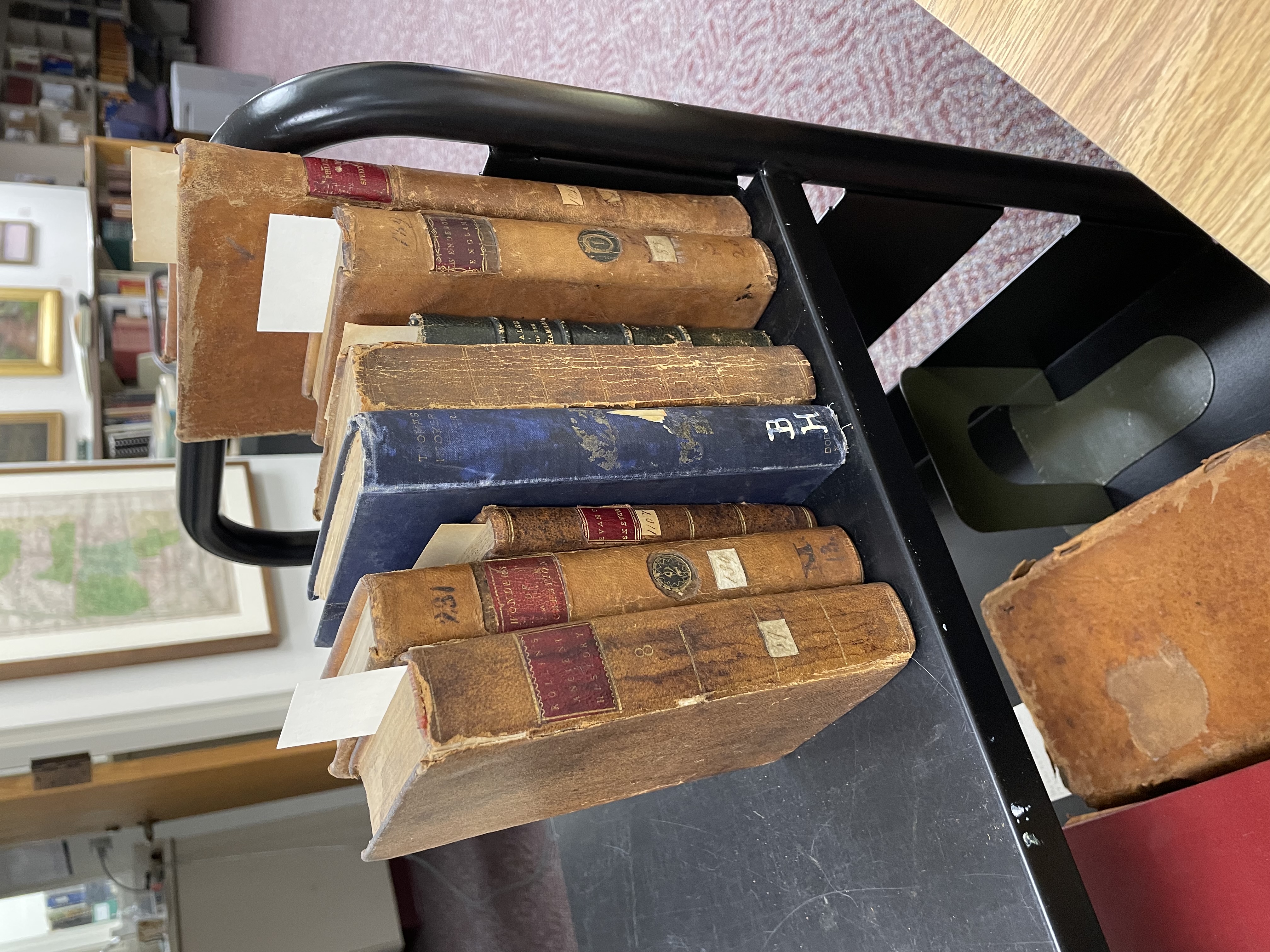
For this project, I bought a special vacuum with a HEPA filter, some microtools for vacuuming small surfaces and crevices, and I have learned how to vacuum a book without doing any damage to the object itself. We have been going case by case, pulling the books out and placing them onto a cart, then cleaning the shelves on which they live, and using
the vacuum technique to clean them. We also wipe them down gently with magnetic cloths. Books that are in need of special attention, we set aside to be looked at more closely later.
This is why, if you come into the Farmington Room now and probably for the next month or so, you may notice that there are far fewer of these books on the shelves than there usually are.
What are you interested in?
As always, I am as fascinated by what I find in the collection as what I don’t find. What aspects of Farmington/Unionville history spark interest for you? See if we have anything in the Farmington Room about it! Come visit us on a Wednesday or Thursday from 10am-1pm or make an appointment to come outside of those hours. I can be reached by email at jneely@farmingtonlibraries.org, or by phone at (860) 673-6791 ext 5213.
Many thanks and happy research!
Jerusha Neely, Local History Librarian