

Adventure Awaits! Farmington Room Edition
I’m writing on the eve of our Summer Reading kickoff, the theme of which is Adventure Awaits. If you walk through the libraries this summer, you will see each department transformed into a rainforest or jungle, featuring resident critters in various artistic media, giant vines and trees, and possibly (in Information Services, at least) even a waterfall. Since our local history involves a very different physical environment, I made my display about three beloved outdoor spaces in Farmington/Unionville, all of which have fascinating histories: Suburban Park, Shade Swamp Sanctuary, and the Farmington Canal Heritage Trail.
The display will be up until the end of August, so come and take a look! I learned a great deal about these three spaces and about some of the organizations and people involved in their development. There is way more to know about these parks and trails that I could not include due to space limitations, so I hope what’s up there will spark further inquiry. I am happy to help answer any questions you may have and would love to hear any memories or stories you have to share.
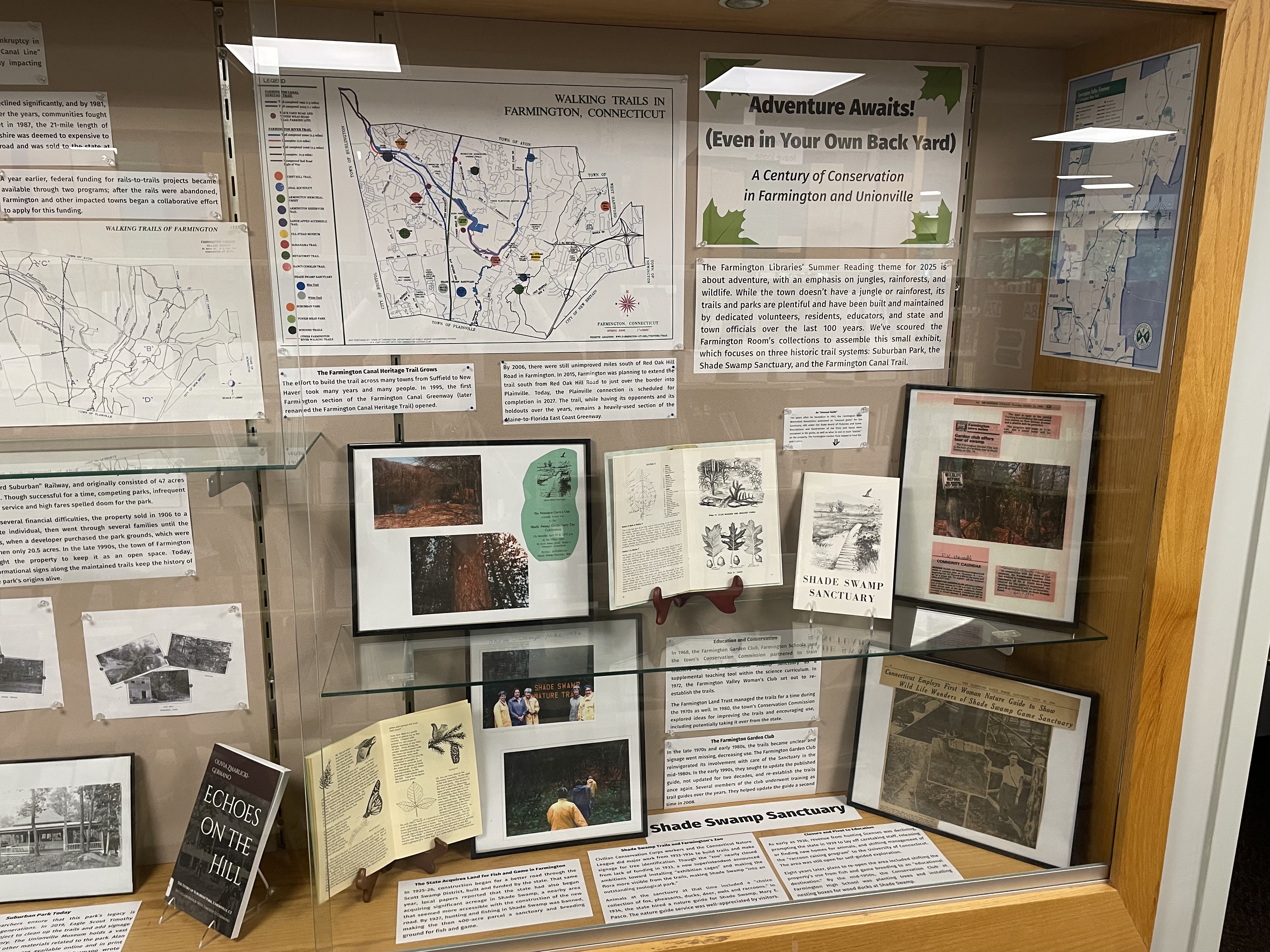
Though I had a great time researching all these spaces, I especially loved learning about the Canal Trail. I live very near this trail; I have used it many times in the few years I’ve been in this area and drive over it several times a day. The history of this trail is one of transportation (for people and commercial freight) as well as preservation.
I scratched the surface of learning about the Rails to Trails movement and how federal legislation and funding around rail service, approving the establishment of a national trail system, and “railbanking,” or the practice of preserving rail lines for other uses, all worked together to facilitate the trails many of us love to make use of.
I also learned a little bit about the deregulation of railroads and how the abandonment of rail lines was piecemeal over time, and how communities, companies, and officials debated and responded to each other. I feel incredibly lucky that part of my job is to learn things that are new to me, and share what I learned with others, whether they know the history or not.
The exhibit is in the display case next to the Farmington Room, on the second floor of the library, and can be seen any time that the Library is open.
Doing My Own Research in the Farmington Room
For my displays and history talks, I get to use all aspects of our awesome collection: reference, vertical file, archival, and even digital collections. After determining my topic and pinpointing the questions I want to answer, I try to go from general to specific in gathering my information.
When starting my research, I go first to the reference collection via our online catalog, Encore. Or, if I’m feeling lucky, I will browse the shelves (and I might do both). Chris Bickford’s comprehensive Farmington in Connecticut (1982) is usually the title I check first no matter what results my keyword searches bring up.
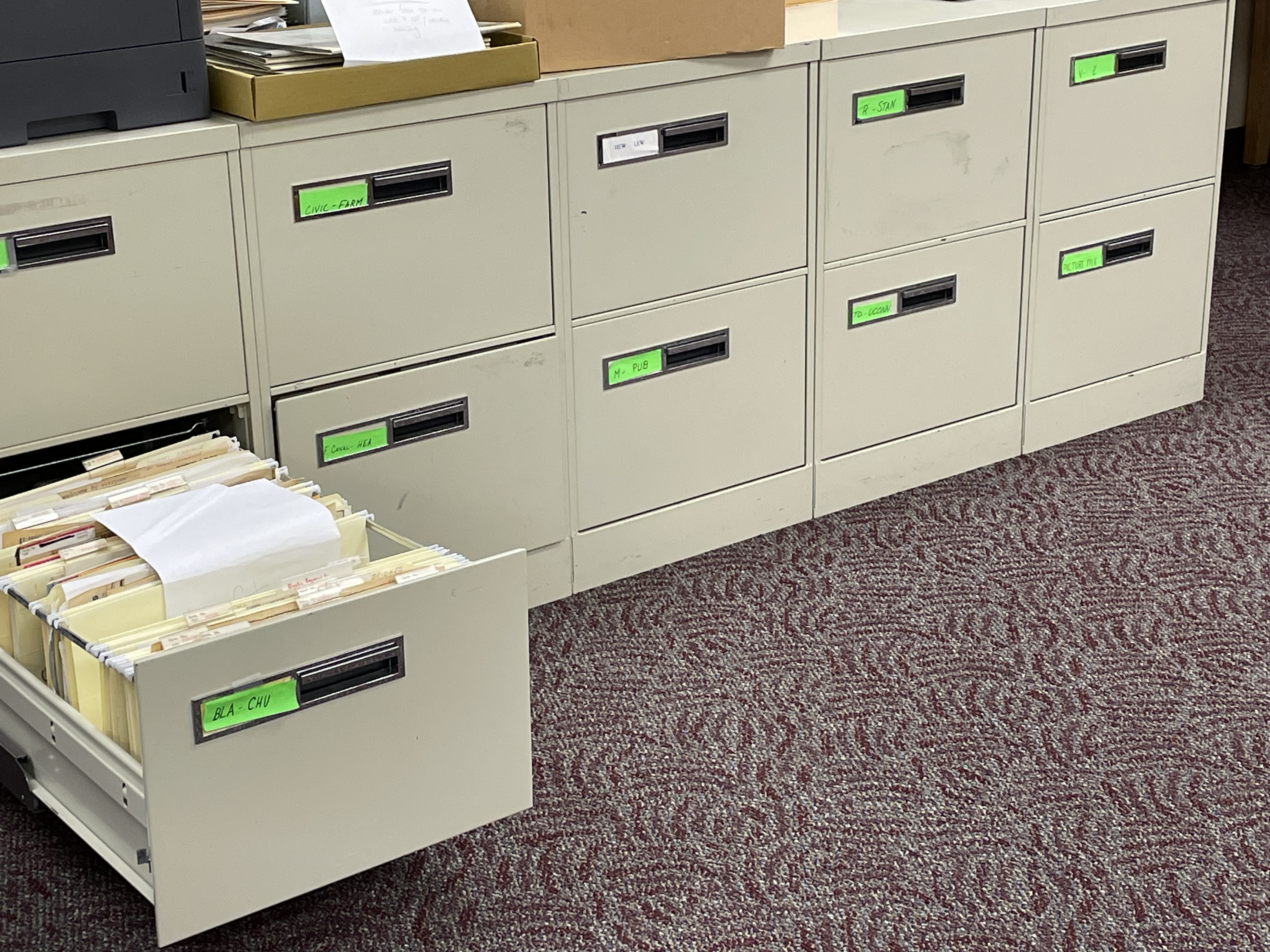
Our vertical file collection is clippings and ephemeral items, from newspapers, magazines, brochures, research others have left behind to share freely, transcripts of interviews and speeches, and we find many other surprises in those filing cabinets nearly every single day. The vertical file collections are organized by topic, which could be a person’s name, a place, an organization or other entity, an event, or a subject, like “transportation.” I will check there next to see what’s been written on my topic.
Maybe my favorite place to check is our digital newspaper collections: we have access to the Historic Hartford Courant, major dailies through our “News and Newspapers” database, and the Farmington Valley Herald. We can’t collect everything…so it’s amazing that these newspapers have been digitized, and that they are searchable by date and keyword. The Historic Hartford Courant (up to the year 1999) and the Farmington Valley Herald will show you the original digitized page, where you can see the information in context and any images included in the article. And, you can download and print them.
Another place to check is the CT Digital Archive, where we have posted photographs, digitized documents as far back as the early 18th century, guidebooks, yearbooks, etc. I may also find Farmington/Unionville information at other institutions through the CTDA, such as the University of Connecticut, the Connecticut Museum of History and Culture, the Avon Library, and the State Library. UConn hosts a digital version of the Farmington Magazine (1900-1902), and the Avon Library hosts The Lure of the Litchfield Hills, another long-gone magazine that contains some articles about Farmington and the surrounding towns.
As I’m going through the materials and am taking notes, I will jot down the names that come up: places, organizations, personal names, government entities, etc. All of these can be used for further research to get the most information possible, and they can lead to surprising and exciting discoveries!
For example, I noticed that the Farmington Garden Club was listed as having helped produce the 1990s update of the Shade Swamp Sanctuary, which I found in the reference collection when I started doing my research on Shade Swamp. When I started checking the online newspapers, I began seeing a ton of information on the Farmington Garden Club in connection with the Shade Swamp Sanctuary and realized they did quite a lot to connect the area and the community. Then I remembered that we have a sizable Farmington Garden Club collection in our Archives Room, and found a treasure trove of clippings, photographs, flyers, and other great stuff that I ended up using for the display. When I started on this particular topic, I had no idea that I would find so much on Shade Swamp by researching the history of the Farmington Garden Club.
In my mind, what I don’t find is as intriguing as what I do find. What aspects of Farmington/Unionville history spark interest? See if we have anything in the Farmington Room about it! Come visit us on a Wednesday or Thursday from 10:00 AM-1:00 PM or make an appointment to come outside of those hours. I can be reached by email at jneely@farmingtonlibraries.org, or by phone at (860) 673-6791 x5213.
Many thanks and happy research!
Jerusha Neely, Local History Librarian